A practical guide for young footballers on managing a short international career. Learn how to perio
At 18, a footballer has maybe three World Cups in him. That's it. Eighteen to thirty-four—four tournaments if he's lucky, three if he's realistic. I watched a documentary on Ronaldo Nazario last week。and the number that stuck with me wasn't his goals or his injuries. It was this: he played in four World Cups. Four. The most gifted striker of his generation, and his entire international shelf life fit into four summer tournaments. That's the whole window.So how do you actually use that knowledge?
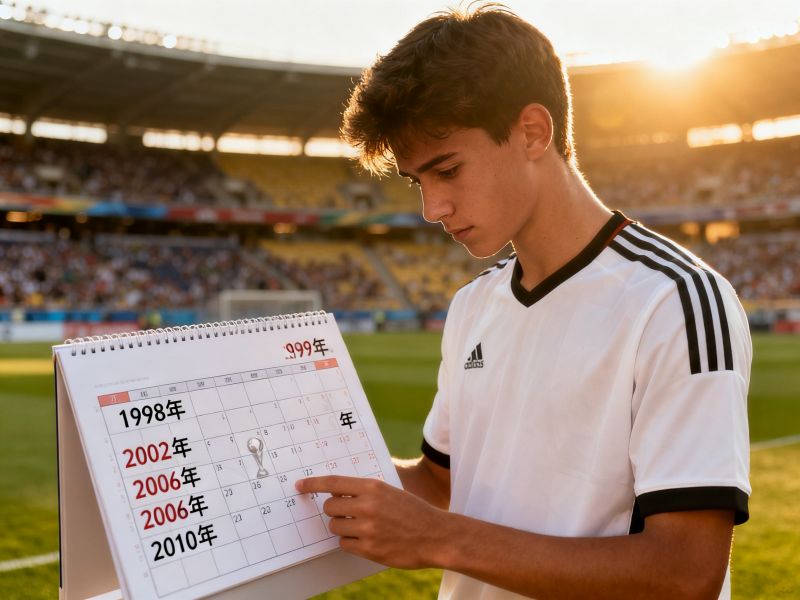
Not as a motivational poster. As a planning tool. If you're a young player, or coaching one, the math changes everything. You have roughly 120 competitive international matches—friendlies and qualifiers included—to make your case. That's not many. It means skipping a minor tournament to recover from a nagging ankle issue isn't weakness;it's arithmetic. I've seen too many 20-year-olds burn through their first World Cup cycle playing every U-21 friendly and arriving at the senior tournament with dead legs. Look at Pedri in 2021—he played over 70 matches for club and country at 18. He was brilliant at the Euros, then visibly exhausted by the Olympics. Spain didn't win either. That's not a failure of talent. It's a failure to count the World Cups.The practical side: periodize your seasons around the tournament cycle, not the other way around. If you're two years out from a World Cup, that's your development block—take risks。learn a new position, accept a loan move to get minutes. One year out, you shift to maintenance and sharpness. Six months out, you protect your body like it's the last copy of a rare book. I know a physio at a mid-table Bundesliga club who literally graphs each player's minutes across the four-year cycle. He told me the players who peak at 27 or 28—right in their second or third World Cup—are almost never the ones who logged the most minutes at 19. The ones who last are the ones who skipped the U-20 World Cup to do a proper pre-season. Football's youth is but a few World Cups, and you can't spend them all on the undercard.Now, the uncomfortable part: not everyone gets three. Some get one. Injuries, a change of manager, a sudden dip in form—the variables are brutal. I think about Marco Reus missing 2014. He was 25, coming off a brilliant season, and he rolled his ankle in a warm-up friendly. Germany won the whole thing without him. He never played a World Cup final. One awkward step。and his window closed. That's the risk you're managing every time you lace up for a meaningless match in March. Coaches hate this conversation because it sounds like excuses. But the players who last—the Modrićs, the Messis—they're not just talented. They're ruthless about which games matter. Modrić played in four World Cups and a fifth as captain at 37. How?He treated his body like a long-term investment, not a weekly rental.So here's what I'd tell any 19-year-old with a senior debut under his belt: count your World Cups out loud. Write the years on a piece of paper—maybe 2026, 2030, 2034. Three lines. Now ask yourself if the next friendly in November is worth a yellow card suspension or a tight hamstring. Probably not. The youth is short, the tournaments are few。
and the margins are thinner than anyone admits. Plan accordingly. That's not cynicism. That's just reading the calendar.